

|
|
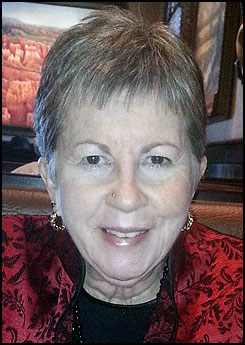 Although I was born in Madison, because my Dad’s job required working in other states, I grew up in South Carolina, Ohio, Pennsylvania and, ultimately, back in Madison. My Mom hailed from Madison, and my Dad from Walterboro, SC. I consider myself half "South Carolinian" and cherish my remaining family in the south. Their traditional way of thinking only served to reaffirm my passion for civil rights.
My early love of reading, writing and history, fueled by the current events of the 60s, led me not far from Madison’s LaFollette High School to the UW-Madison. I earned my bachelor’s degree from the School of Journalism in 1973.
After graduation and a short stint in advertising, where I gained invaluable real-world experience, I began my career with the state in 1976. As a public information officer (PIO) at the Public Service Commission, I worked with technical staff, agency administrators, political appointees and reporters.
I also learned the ins-and-outs of state government budget development, falling victim in 1979 to budget and position cuts. With a recommendation from a senior reporter who I'd come to know as he covered the PSC, I transferred to the Bureau of Information and Education at the DNR. At the time, I had the gut feeling that I was jumping from the frying pan into the fire. Doing so, it was the best move of my young career.
I was assigned the "beat" of PIO for the Bureau of Water Grants, which later expanded to include associated water and wastewater programs. My priority was to work with the media and the grants program staff to develop and deliver information to the public, the legislature and local officials. I was fortunate to travel the state to learn about the service DNR field staff provided local officials. businesses and private citizens.
In the Bureau of I & E I gained invaluable experience working with seasoned graphic artists, photographers and video producers. Without a doubt my most insightful lessons were learned working side-by-side with these and other public information, education and marketing colleagues.
There were times when I & E staff, myself included, were called upon to work as members of teams on department efforts of wide-reaching impact. For example, I was fortunate enough to be assigned to provide media support during fire seasons. Some of my most "colorful" and exciting work was done as a staffer for the media center during the years when spearfishing was most contentious. I'll never forget taking a call from a local resident who told me where I could stick a spear.
As our bureau developed, taking on more responsibilities for informing and educating the public, I was selected to become the section chief for the Media, Arts and Reference Section (MARS). This was truly a collective of highly-talented and in-demand graphic designers, typesetters, printing purchasing agents, photographers, videographers and librarians, whose customers were drawn from virtually every DNR program. It was my honor to work with these committed public servants.
One of my proudest moments in this role was convincing the agency, which then exclusively used DOS-based computers, to allow us to bring in Apple computers for our graphic artists. Our designers went from feeling overworked and poorly equipped, to overworked with the equipment needed to better meet their customers' needs in a more proficient manner.
Prior to hiring the chief of the agency's Education Section, I also served as its interim chief. DNR educators trained thousands of school teachers how to incorporate lessons about natural resources into a variety of curricula. The ultimate goal was to teach students how, not what, to think about caring for their natural resources.
While "chief Martian," I was responsible for managing the agency's new recycling funds. This gave me more opportunities to participate in developing materials and work with staff who managed the state's first recycling program. I was honored when, having worked with one of our graphic artists, we received an International Association of Business Communicators award for a handbook/toolbox for local governments to successfully manage their recycling programs.
In the mid-90s, I underwent my second position cut. I now was beginning to learn that a career change could be a chance to grow. My new post was as chief of the administrative section in the IT bureau. Being a "word person," rather than a "techie," I was amazed when I actually had accrued enough knowledge of the technology, equipment and processes that I could converse intelligently with co-workers. I managed the fiscal, administrative and staff resources needed to serve DNR programs developing the technology they needed to serve DNR's external customers.
By the early 2000s, the political mood strongly focused on reducing the size of the state workforce. Once again, my position was placed on the chopping block, and I was off to an entirely different program: Forestry. No longer in a support program that relied on other programs for operating funds, I was given the tools needed to recruit and hire foresters.
In 2006, with 30 years with the state, and having lived to the ripe old age of 55, I decided to retire from full-time state service. Given multiple family health care demands, multi-tasking wasn't serving well my family and the requirements of my 50-60 hour-a-week job. So, I looked at the numbers. Although I knew it wouldn't be easy, I decided it was time.
After meeting the separation rule, I returned to my roots in the information and education program. Once referred to as the "czarina of LTEs," I accepted my first and only LTE job as editor of the decades-old "DNR Digest." It was ironic that I had served as "Digest" editor in my early days, when the internal newsletter was written on typewriters and laid out by hand. I now could entirely produce it myself online. And, as it had been in the good ol’ days, my goal was to give staffs around the state a way to share their work and accomplishments. My LTE position and the "Digest" ended abruptly one day in 2013, when the first-appointed (by Stepp administration) communications director decided that such an internal publication was frivolous.

While working full time, I was a single mom to two wonderful children, Ethan and Meagan. My heart was shattered when my daughter died on January 6, 2021. That wasn’t a good day for my family or our country. Three months later, I lost my youngest brother and dear friend.
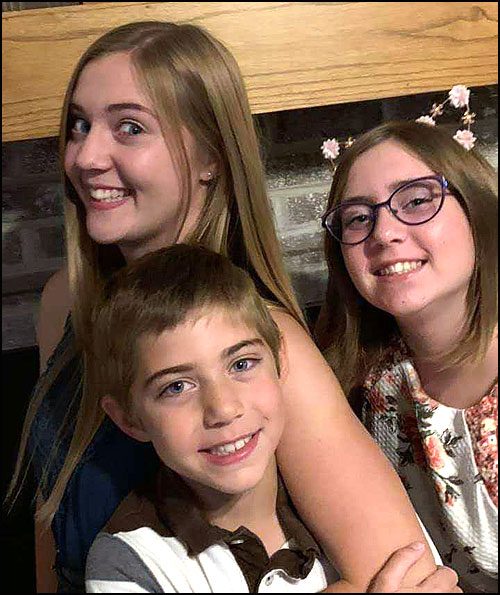
When my son married in 2018, I became an instant grandmother to Abria, Chaya and Eliam. I learned immediately that I could unconditionally love these awesome kids as though they had been born into my family.
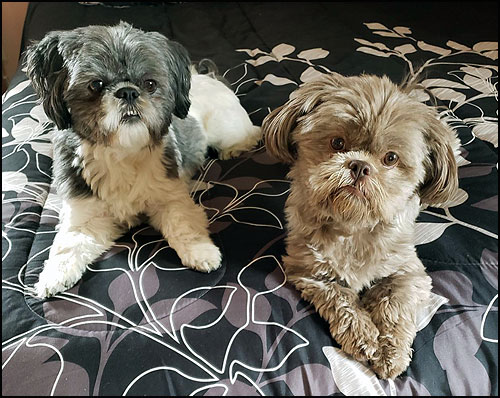
My husband Bob Spector and I live on the southwest side of Madison with our Shih Tzu pups Mazy Mae and Leia Loki. Named after Princess Leia and Loki of Avengers fame, Leia became a part of our household and hearts when her “mama” Meagan died.
In 2020, I became a leader of a new neighborhood team supporting the Democratic Party of Wisconsin: the Southwest (Madison) Action Team, or SWAT. I take pride in crediting our hardworking volunteers with turning Wisconsin blue in the presidential election. I bring my strong commitment to the health of our environment and the stewardship of our natural resources to my work with our team and the WisDems.